
Bromeliaceae
Bromeliaceae Juss. (1789)
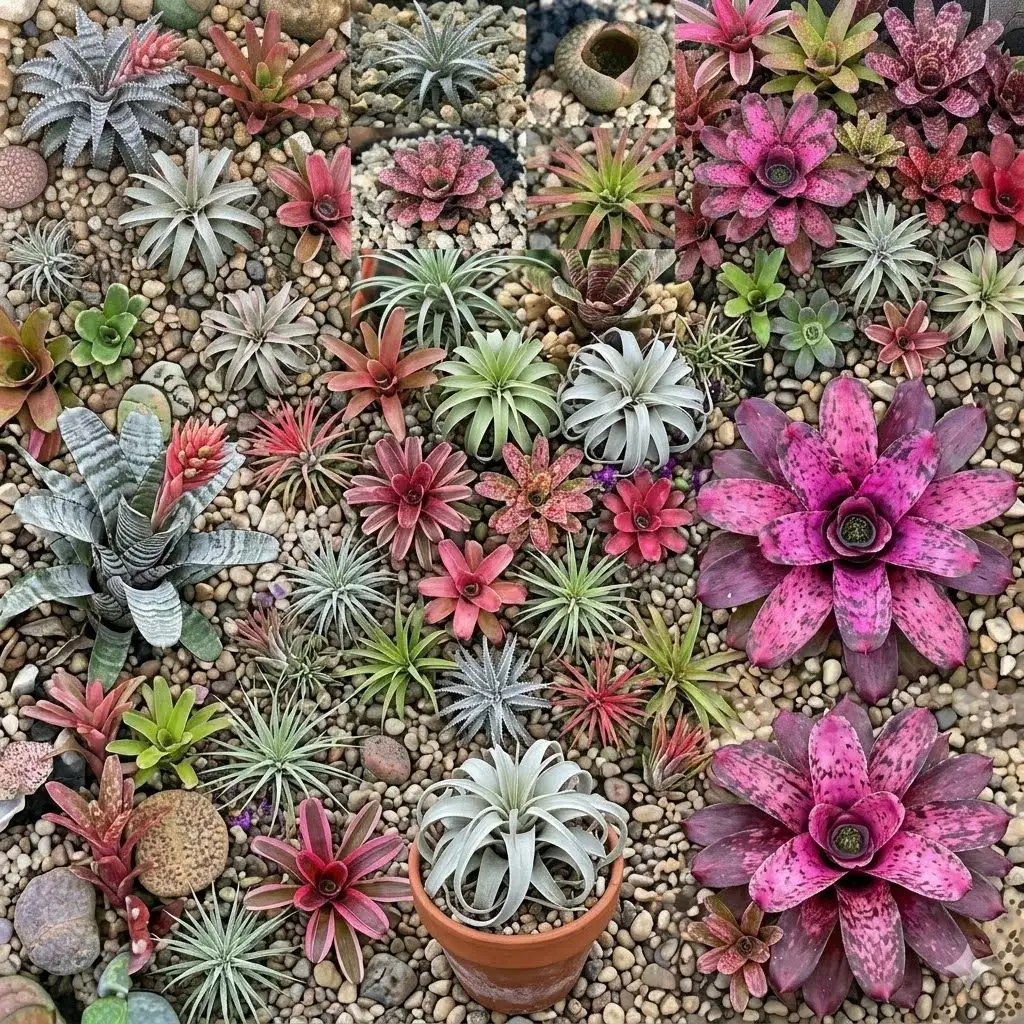
Familia monocotiledónea exclusivamente americana (excepto una especie africana), que comprende más de 3.500 especies distribuidas desde el sureste de Estados Unidos hasta el sur de Chile. Incluye plantas epífitas, terrestres y rupícolas adaptadas a condiciones extremas, desde selvas tropicales hasta desiertos y páramos de alta montaña. Se caracterizan por sus rosetas con hojas modificadas que forman cisternas para la captación de agua y nutrientes.
Abromeitiella
Abromeitiella
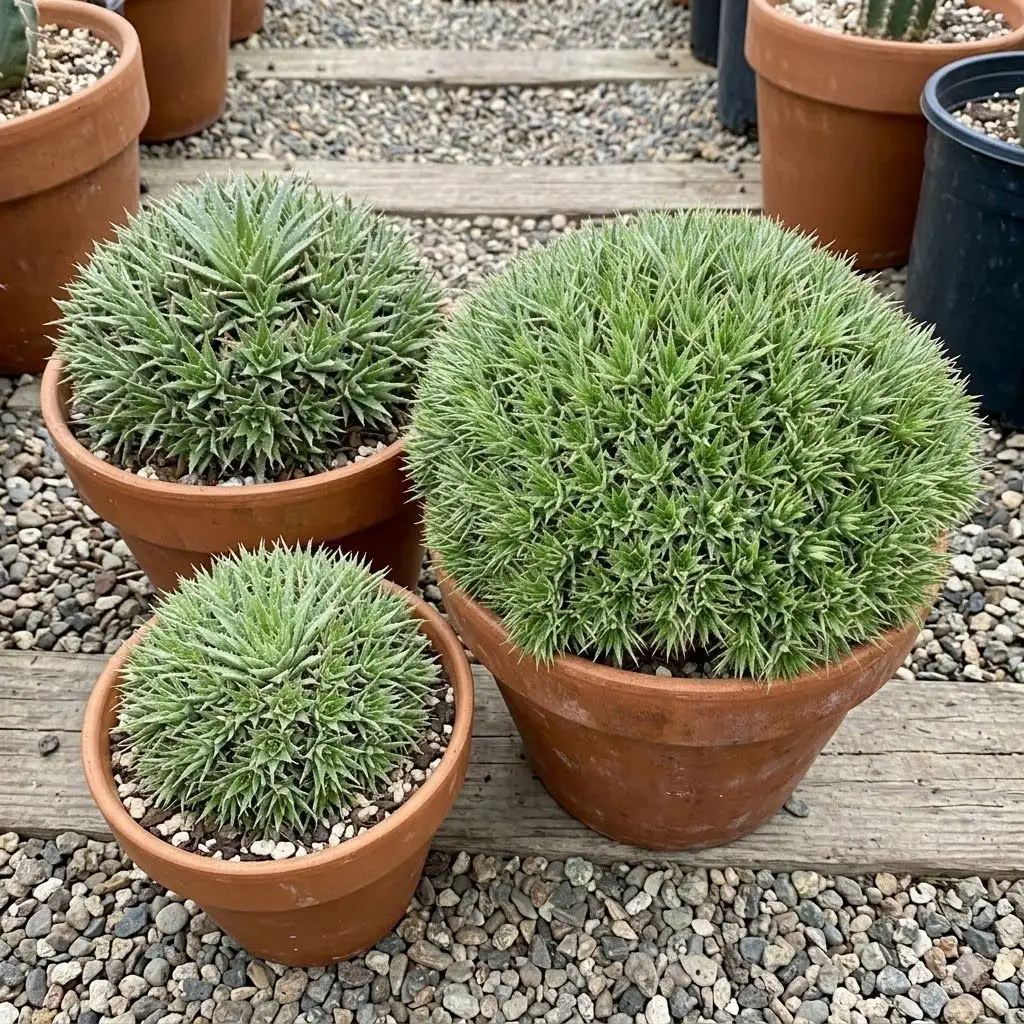
Género de bromelias terrestres y rupícolas que forman almohadillas densas de rosetas diminutas. Endémico de los Andes de Bolivia y Argentina, crece en afloramientos rocosos y laderas pedregosas entre 2.500 y 4.200 m s.n.m. Sus hojas rígidas y espinosas forman cojines compactos que pueden alcanzar varios metros de diámetro con el tiempo. Filogenéticamente cercano a Deuterocohnia, con el que comparte la subfamilia Pitcairnioideae.
Acanthostachys
Acanthostachys
Género monoespecífico de bromeliáceas terrestres y epífitas originarias de América del Sur. Se caracteriza por sus hojas alargadas, rígidas y armadas con espinas, y por su inflorescencia tipo piña de color naranja-rojo.
Aechmea
Aechmea
Género de bromelias epífitas y terrestres de la familia Bromeliaceae, con más de 250 especies nativas de América del Sur y Central. Se caracterizan por sus rosetas con urna central que retiene agua, sus vistosas inflorescencias en espigas o panículas y sus hojas serradas. Muy apreciadas como plantas de interior.
Alcantarea
Alcantarea
Género de bromeliáceas gigantes endémico de Brasil, principalmente de afloramientos rocosos (inselbergs) en la Mata Atlántica. Sus rosetas monumentales pueden superar los 2 metros de diámetro. Anteriormente clasificado en Vriesea, fue segregado por diferencias morfológicas y genéticas.
Ananas
Ananas
Género de bromeliáceas terrestres nativas de América del Sur tropical, famoso mundialmente por Ananas comosus, la piña de consumo. Sus rosetas forman depósitos de agua centrales y la inflorescencia característica produce una infrutescencia sincárpica comestible en las especies cultivadas.
Andrea
Andrea
Araeococcus
Araeococcus
Billbergia
Billbergia
Género de bromelias epífitas y terrestres originarias de América del Sur y Central, apreciadas por sus vistosas inflorescencias colgantes y su gran tolerancia a condiciones variables.
Brocchinia
Brocchinia
Bromelia
Bromelia
Género tipo de la familia Bromeliaceae, compuesto por bromelias terrestres robustas con hojas espinosas. Ampliamente distribuido desde México hasta Argentina, varias especies tienen usos alimenticios, medicinales y como cercas vivas.
Canistropsis
Canistropsis

Canistrum
Canistrum
Catopsis
Catopsis
Cottendorfia
Cottendorfia
Cryptanthus
Cryptanthus
Género de bromelias terrestres nativas del Brasil, conocidas como "estrellas de tierra". Se caracterizan por su roseta plana y sus hojas finamente dentadas con bandas decorativas.
Deuterocohnia
Deuterocohnia
Disteganthus
Disteganthus
Dyckia
Dyckia
Género de bromelias xerofíticas de la familia Bromeliaceae, nativas de América del Sur (principalmente Brasil, Argentina, Bolivia). A diferencia de la mayoría de bromelias, las Dyckia son plantas terrestres sin urna central, con hojas espinosas muy resistentes y flores en espigas largas. Muy adaptadas a la sequía y al sol pleno.
Edmundoa
Edmundoa
Encholirium
Encholirium